
Paragliding and vertigo - are they really incompatible?
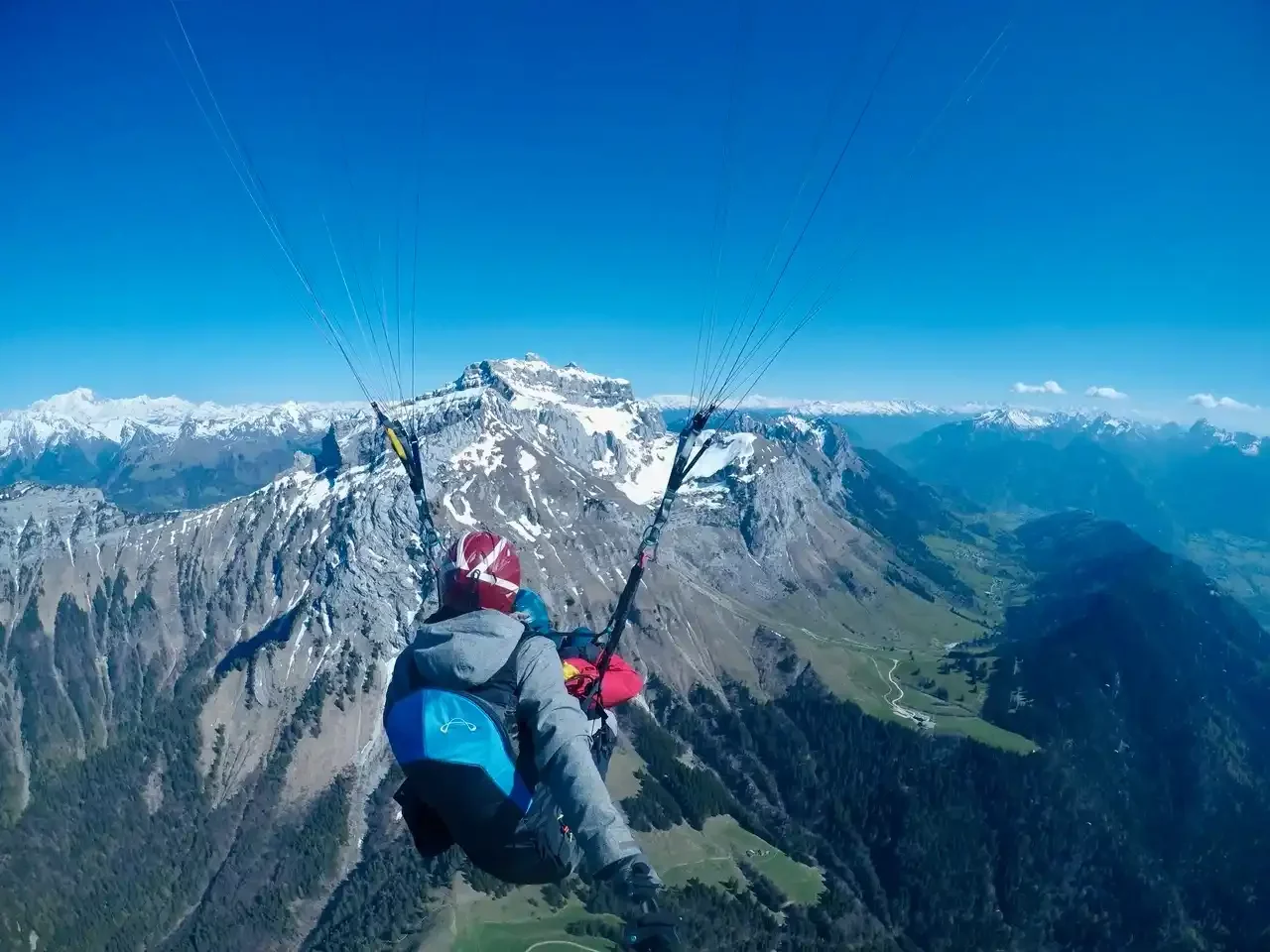
The fear of heights when paragliding is a common but often misunderstood fear. Many people use this fear to avoid taking to the skies on a first flight. However, it's time to deconstruct this preconceived idea and explain why paragliding does not cause vertigo.
Understanding where vertigo comes from
To begin with, let's clarify the concepts of vertigo and fear of heights (or acrophobia). Vertigo is a feeling of imbalance that occurs when you are high up, with your feet in contact with the ground or a structure connected to the ground. It results from a conflict between the visual information received and that perceived by the inner ear.
Acrophobia is an irrational fear of heights, manifested by an irrepressible aversion or attraction to heights. This natural apprehension is often amplified by our brain, which imagines the risk of falling. It affects a large proportion of the population, but can be modulated with experience and practice.
Does paragliding make you afraid of heights?
When paragliding, you are not in contact with the ground, which eliminates the sensory conflict responsible for vertigo. If there is any remaining apprehension, it is more akin to acrophobia, but the experience of flying in a safe environment with a professional instructor often transforms this fear into fascination.
Preparing for a successful first flight
Our advice for making the most of your first paragliding experience:
- Look far ahead, towards the horizon and not the ground,
- Don't hesitate to express any fears you may have. The instructor will be able to adapt the flight and avoid acrobatic manoeuvres if necessary,
- Breathe calmly and concentrate on the activity in progress, as this will help to reduce your stress,
- Eat properly before your first paragliding flight, as hypoglycaemia could make you even more nervous.
If you decide to fly solo later, start with short flights at low altitude to help you acclimatise gradually.
What to expect during the flight
A paragliding flight is divided into three phases: take-off, flight and landing, each with its own set of emotions.
Take-off
Take-off is generally the most stressful part of the flight. Unlike skydiving or bungee jumping, paragliding take-off is gentle and gradual. Once the wing is inflated, you will be gently pulled upwards and once airborne, you will settle comfortably into a harness, like in a hammock.
The flight
Once in the harness, flying is a unique experience. You may feel a slight pitching motion, similar to that of a swing. The turns are fluid, and when you enter a thermal you may feel the wing pulling you upwards.
Landing
As you approach the ground, you may feel a mixture of relief and nervousness. However, your pilot will perform a flare manoeuvre to slow the speed and ensure a smooth landing. With a favourable breeze, you could even land without having to run.
Is paragliding risky?
When practised with a professional instructor, paragliding is a safe discipline. There are a few recommendations, however:
- Dress comfortably and warmly, as it gets cooler at altitude.
- Make sure you have the right equipment: closed shoes, sunglasses, a windproof jacket, close-fitting clothing and avoid accessories that can easily blow away.
- Listen to and follow the instructions given by your instructor during the briefing.
In conclusion, dare to experiment!
Remember that paragliding is not at all frightening. Once you're in the air, any initial apprehension quickly disappears, giving way to enthusiasm. What's more, qualified and experienced instructors will be there to listen to you. They will answer all your questions and guide you to make sure your first paragliding experience goes as smoothly as possible.