Become a paragliding instructor, the complete guide to turning your passion into a profession!
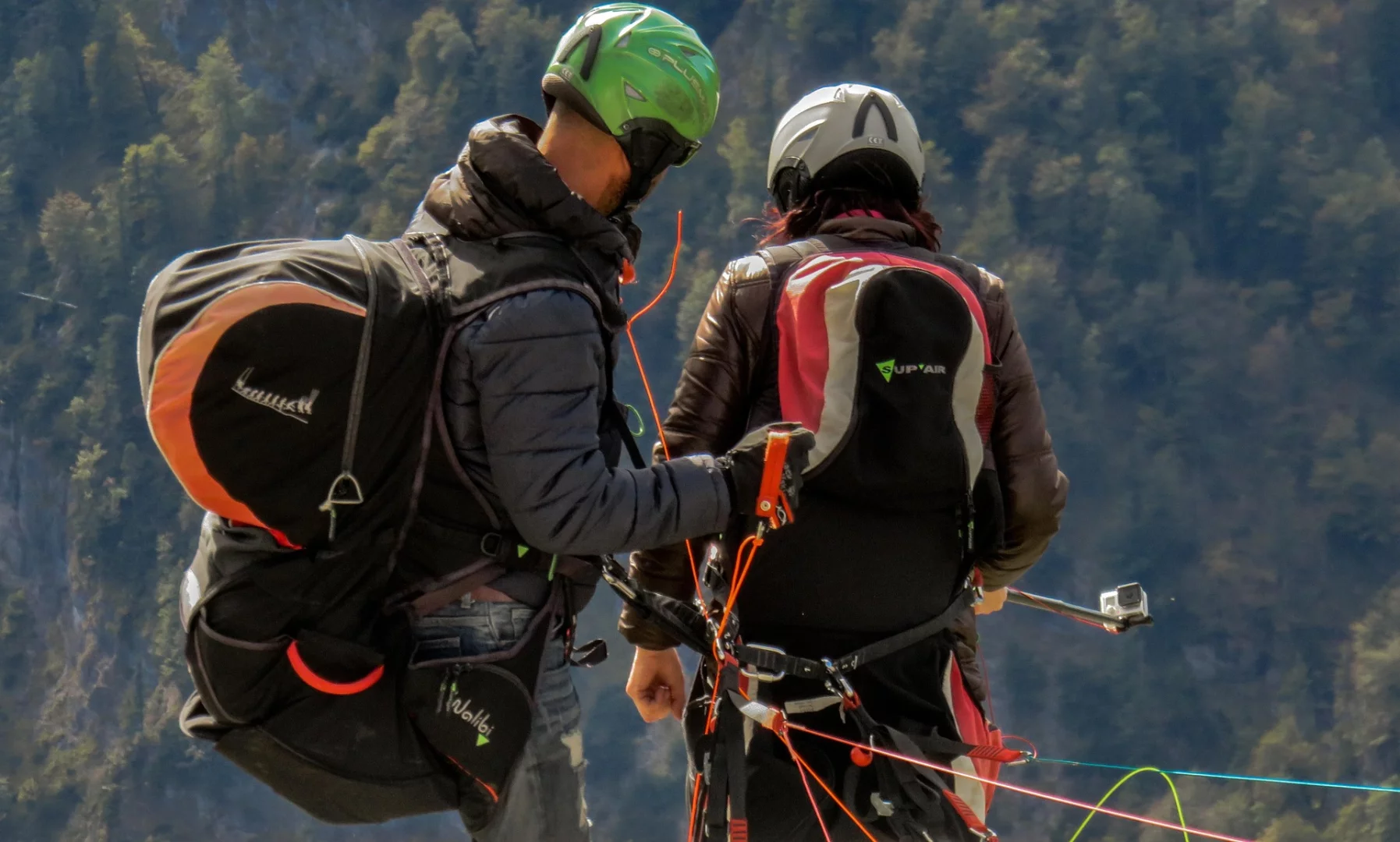
If you dream of turning your passion for paragliding into a profession and helping other paragliding enthusiasts to learn, becoming a paragliding instructor is a path rich in adventure. This profession combines technical expertise, teaching skills and a healthy dose of passion for the great outdoors.
The job of paragliding instructor
A paragliding instructor is much more than just a teacher. They are responsible for the progress and safety of students, whether they are beginners or experienced. Their role has two complementary aspects:
- Theory: they teach the fundamentals that are essential to paragliding, such as understanding meteorological phenomena, the basics of aerodynamics and aviation regulations.
- Practice: in the field, they accompany students to teach them how to take off, master piloting, safety manoeuvres and landing techniques.
In addition to supervising students of all levels, the instructor can organise first flights in tandem. His or her main mission is to build confidence and ensure safety in an environment where the elements are constantly changing.
It is a job that requires rigour, adaptability and a keen sense of human contact. Every day is different, and each student progresses at his or her own pace, which is what makes this job so rewarding.
The steps to becoming a paragliding instructor
In France, the profession of instructor is regulated. Here is the detailed process:
Step 1: Obtain the Advanced Pilot's Certificate (APC)
The Advanced Pilot's Certificate (APC) is a prerequisite for instructor training. This diploma certifies an advanced level of piloting, essential to guarantee the safety of future students.
Obtaining the BPC requires several years of practice. It includes mastering autonomous flight in various conditions, analysing weather-related risks, and managing emergency situations.
Step 2: The DEJEPS, the key diploma
The State Diploma in Youth, Community Education and Sport (DEJEPS) with a paragliding specialism is the key to legally practising as an instructor. This comprehensive course is offered in three approved centres in France: Saint-Hilaire du Touvet, Briançon-Guillestre and Arbas-Luchon.
To access it, you will need to meet several administrative prerequisites:
- Proof of identity and a clean criminal record.
- A medical certificate attesting to your aptitude.
- The PSC1 diploma (level 1 Prevention and Civil Protection).
- The Advanced Pilot's Licence (BPC) issued by the FFVL.
- An immersion certificate proving that you have observed the profession in a paragliding school (at least 5 days).
- A certificate validating 250 points in the Federal Distance Cup or another result recognised by the FFVL.
The Prerequisite Tests (TEP) come next. These tests include an advanced piloting demonstration, a physical evaluation in the form of a running test, and a motivational interview with a jury. In case of high attendance, an additional selection is made.
DEJEPS training: a combination of theory and practical immersion
DEJEPS training lasts 18 months, alternating theory classes, practical exercises and immersion in a school.
The theory lessons cover meteorology, flight mechanics, regulations, teaching methods and risk management. The practical lessons include supervising students, tandem flights and analysing weather conditions. Internships in paragliding schools allow for immersion supervised by professionals.
Cost and financing of training
The DEJEPS course costs approximately €13,000. Fortunately, several financing options exist:
- Personal Training Account (CPF): particularly useful if you are an employee or in retraining.
- Regional aid: some regions support training related to outdoor sports.
- Partnerships with paragliding schools or personal funding.
Opportunities and career prospects
Where can you work?
- In paragliding schools: most instructors work as freelancers with paragliding schools, such as K2 Parapente, located in mountainous regions (Alps, Pyrenees, Massif Central, Vosges).
- As a self-employed person: Some instructors choose the status of auto-entrepreneur or self-employed person, enabling them to organise their own courses, training sessions or first paragliding flights.
- Abroad: iconic destinations such as Switzerland, the Andes or Nepal offer great opportunities.
Working conditions
The job is seasonal, with activity concentrated from April to October. The days are often long and dictated by the weather. In winter, many instructors temporarily switch to activities such as skiing or hiking. Some of them take advantage of the winter season to offer tandem flights in mountain resorts.
Remuneration
A beginner instructor earns between 1,500 and 2,000 euros net per month. The income of the self-employed varies according to their clientele, their location and the services offered.
Possible developments
With experience, an instructor can move into new specialisations or responsibilities. They can become a trainer of future instructors, specialise in disciplines such as acrobatics or speed-riding, or even set up their own paragliding school. Some also choose to diversify their skills by exploring other outdoor sports or developing complementary educational activities.
Finally, becoming a paragliding instructor means choosing a career that combines passion and transmission. It is a demanding profession, but it offers infinite horizons, grandiose landscapes and the satisfaction of seeing your students conquer the air. If you are up for the challenge, the sky awaits you!