
Paragliding and parachuting: two experiences not to be confused
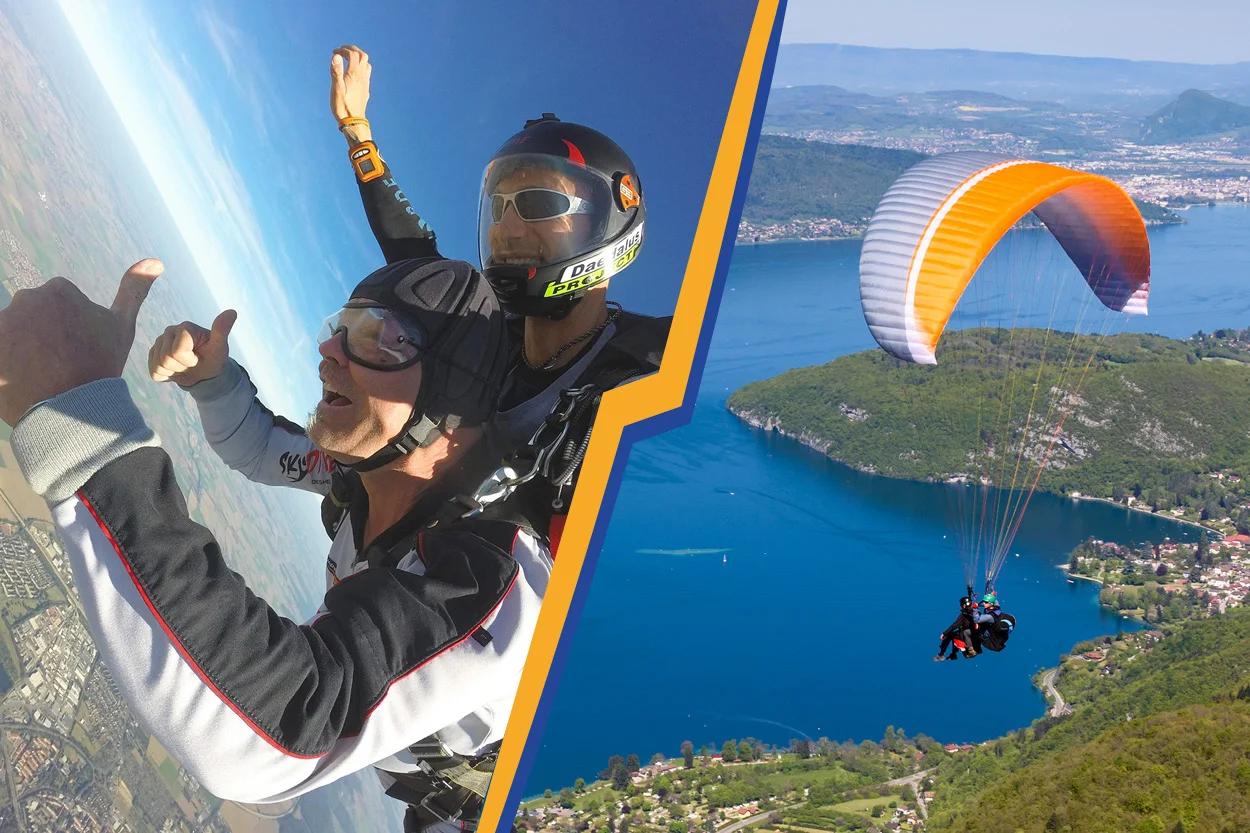
When we dream of flying, two images often come to mind: a spectacular and intense parachute jump, and a calm and contemplative paragliding flight.
Both aerial experiences have their own charm, but they don't necessarily appeal to the same audience.
Contemplative flight or express jump?
One of the main differences between paragliding and skydiving is the amount of time spent in the air.
In skydiving, the experience usually begins at an altitude of 4,000 metres. The free fall lasts around 40 to 60 seconds, followed by 4 to 6 minutes under the canopy. It's an intense experience and everything happens very quickly.
In paragliding, the experience is more gradual. From a summit such as the Col de la Forclaz (an iconic starting point in Annecy), take-off is smooth and the flight can last from 10 minutes to over an hour.
Free fall or smooth take-off?
Skydiving involves a significant moment: jumping out of a plane. For some people, this step is a major psychological hurdle. The sensation of falling is immediate, and you descend vertically in free fall until you deploy your parachute as you approach the ground to slow your descent.
In contrast, with paragliding, there is no jump. You run a few steps on a gentle slope, the wing inflates, and you rise gently into the air.
This gradual transition is reassuring, especially for a first tandem flight. There is no ‘void beneath your feet’; you feel the support of the air immediately. This makes paragliding more accessible, even to people who are prone to vertigo.
Sitting or suspended in the air?
The equipment is another distinguishing feature. In parachuting, the harness is primarily functional and safe, designed for free fall. The passenger hangs fairly upright, with little freedom of movement.
In paragliding, the harness is designed for comfort. You sit as if in an armchair, legs dangling, with a 180° view of the landscape.
Different disciplines for different audiences
Parachuting has strict requirements: minimum age is often set at 15 or 16, a medical questionnaire is mandatory, and weight limits are more restrictive (often 40-90 kg). The intensity of the jump and the emotional impact can require some mental preparation.
Paragliding, on the other hand, is much more flexible. You can fly from the age of 5, in tandem with a qualified instructor. The only requirement is a minimum level of mobility to run a few steps at take-off (even elderly people can fly). This makes it an ideal activity for families, couples or friends, even with very different profiles.
What sensations are you looking for?
Parachuting pushes you out of your comfort zone: it's short, intense and physical. It appeals to those looking for a real challenge and a rush of adrenaline.
Paragliding is more versatile and can be adapted to your desires. Do you like a gentle ride? Choose a discovery flight. Looking for fun? Opt for a thrill flight, with acrobatics and tight turns. Want a memorable experience? Try the prestige flight, lasting 1 hour and 15 minutes, to explore the sky like a bird.
Parachuting and paragliding are two very different ways to discover the joys of flying. The former is more intense, ideal for thrill seekers. The second is more accessible, more contemplative, and can be tailored to your desires. Annecy is an exceptional playground for paragliding. Between the lake, mountains and gentle thermals, it is the perfect place for an unforgettable first flight.
Is it time to see the world from above? Book your flight with K2 Parapente.